


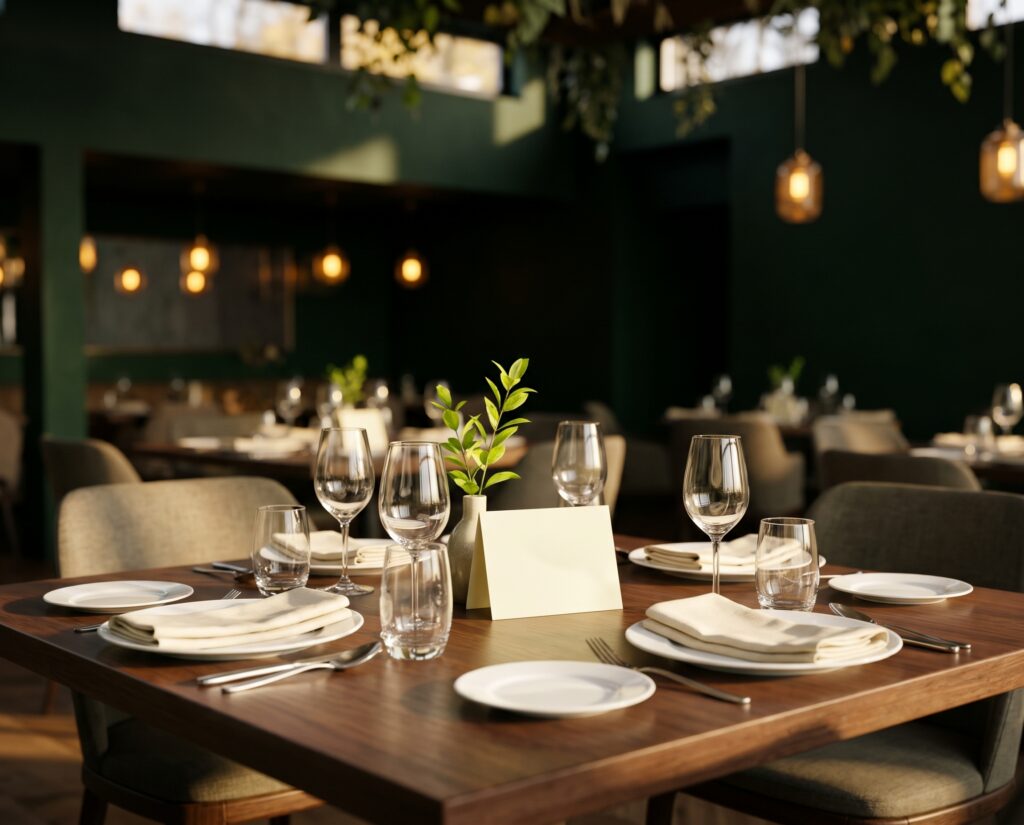
It is Friday, 4:40 pm. The phone rings and a guest cancels a table for four at 7:00 pm. Three hours before the evening starts you have a free table, and other guests may have asked for it in vain a week ago. Whether you fill that table or leave it empty comes down to one thing: a restaurant waitlist.
In this article you will find what a waitlist is, how to run one step by step, and which rules make it fair to guests and useful for you.
Why a cancelled reservation hurts more than it seems
A cancelled table is not just one missing order. The kitchen has prepared, staff are scheduled, and the table is blocked at the best time. The later the guest cancels, the harder it is to sell the table again.
Cancellations are not rare, either. US data from Toast reports that 17% of reservations were cancelled in Q3 2024. This is the American market, not Czech or Slovak conditions, so treat the figure as a rough guide. What matters is an experience that holds everywhere: every venue that takes reservations deals with cancellations regularly, and what counts is what you do with the freed table.
A waitlist is the simplest answer. It costs nothing, needs no menu change, and uses demand you already had to turn away once.
What a waitlist is (and what it is not)
A waitlist is a list of guests who wanted a specific time that was full at that moment, and who agreed that you would contact them if a table opens up.
Do not confuse it with a queue outside the restaurant. A queue is for walk-in guests without a reservation who wait on the spot. A waitlist is for guests who wanted a reservation and did not get one, and you contact them when a table becomes available.
How a waitlist works, step by step
- A guest wants a fully booked time. Instead of “sorry, we are full”, you offer: “I can add you to the waitlist and call you if anything opens up.”
- You record contact details and what you need. Name, phone or email, party size, requested day and time, and how wide a time window the guest will accept (for example 6:00–8:00 pm).
- A table frees up. A cancellation, a change in party size, or an estimate that a table will be free earlier.
- You contact a matching guest from the list, one whose party size and time fit. You give them a short time to reply.
- The guest confirms and the table is booked. If they do not reply, you move on to the next person in line.
It all depends on speed. A table freed at 2:00 pm is easy to sell; one freed at 6:45 pm only with a lot of luck.
Rules that make a waitlist work
- Keep the order fair. Guests are contacted in the order they signed up, if party size and time match. Whoever signed up first goes first.
- Ask about flexibility. A guest who accepts both 5:30 pm and 8:00 pm fits a free table far more often than a guest with a single time.
- Set a clear response limit. Typically 15 to 30 minutes, or shorter on the day of the event. Without a limit you block the table for other guests.
- Promise nothing in advance. Being on the list is not a reservation. The guest must understand it is only a chance.
- Remove the guest once the table is filled. Make sure nobody calls them a second time.
- Tell the guest when it did not work out. A short message after the day closes (“Unfortunately nothing opened up, please try again next time”) costs you a minute and keeps the guest.
When a waitlist makes the most sense
- Fridays, Saturdays and holidays. Demand exceeds capacity, so cancelled tables sell immediately.
- Large tables. A table for six cannot be replaced by a random walk-in. For groups, the waitlist is almost the only way.
- Seasonal peaks and events. Christmas, wedding season, sports broadcasts.
- Smaller venues. Every empty table is a bigger share of the evening.
On a Monday at 3:00 pm with a half-empty dining room, a waitlist makes no sense. There you have the opposite problem: how to attract guests.
Waitlist and overbooking: two different tools
Overbooking means accepting more reservations than you have tables, assuming some guests will not show up. A waitlist works the other way round: you release a table only when it is truly free. That makes it safer. You never end up with a guest arriving and no table available.
Overbooking suits you when you know your no-show history and can estimate it. A waitlist works without data and without risk.
How Rezervato handles your waitlist
Rezervato has a Waitlist feature that keeps your waitlist next to your reservations in one place. You do not need to look for notes in a notebook, on your phone or in messages. You see who is waiting, for which day and for how many people, and the moment a cancellation comes in you know whom to call.
BONUS TIP: reduce cancellations in advance
A waitlist solves what to do after a cancellation. Even better is preventing cancellations. A general best-practice tip: for peak dates or larger groups, a deposit is sometimes used to motivate the guest either to keep the booking or to cancel in time. If you are considering one, communicate it clearly at the time of booking and set fair refund rules. Most cancellations, however, can also be reduced by a simple SMS or email reminder and easy one-click cancellation.
How to tell your waitlist is working
Track three numbers over four to eight weeks:
- How many cancelled tables you filled with a guest from the list. The most important number.
- How long after the cancellation the table was filled again. The sooner, the better.
- How many guests from the list accepted the offer. If it is under half, you are asking about time windows that are too narrow.
If you manage to fill at least some of the cancelled tables, the waitlist pays off after the first month.
Summary
A restaurant waitlist costs nothing, uses demand you would otherwise turn away, and one freed table can make your evening. Three things are enough: record contacts and flexibility, contact guests fairly and quickly, and give them a short response limit.
Frequently asked questions
A list of guests who wanted a fully booked time and agreed that the restaurant will contact them if a table opens up. Being on the list is not a reservation.
No. A queue is for walk-in guests without a reservation who wait on the spot. A waitlist is for guests who wanted a reservation in advance and were told the restaurant is full.
Usually 15 to 30 minutes, less on the day of the event. It is important that the guest knows the limit in advance.
No. It makes sense mainly for busy dates (Friday, Saturday, holidays) and for larger groups. On quiet days you do not need it.
It is safer, because you release the table only when it is free. Overbooking makes sense only if you know your no-show history well.
Sources
- Toast – How to Reduce No-Shows at Your Restaurant (figure of 17% cancelled reservations, Q3 2024, USA). pos.toasttab.com
Want your reservations and your waitlist in one place?
Rezervato has a free plan with your first 100 reservations a month and no commission per booking.
Sign up for free